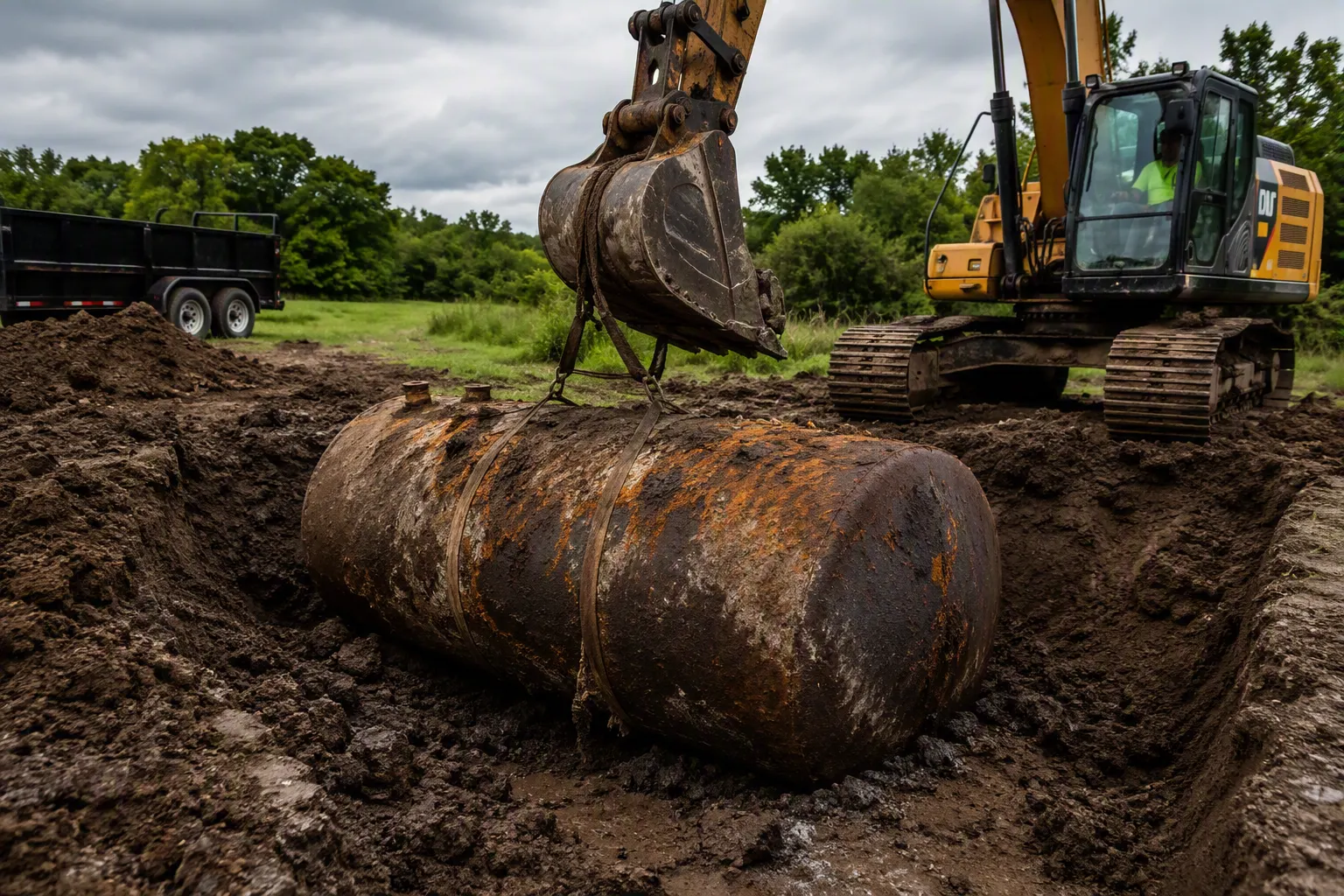
Signs Your Property May Have Soil or Groundwater Contamination from an Old Oil Tank in Southwestern Virginia
Dead grass, stained soil, fuel odors or a sheen on water can point to a leaking oil tank. Learn six warning signs and when to get testing.
Appalachian Environmental, LLC.

Need Help Now?
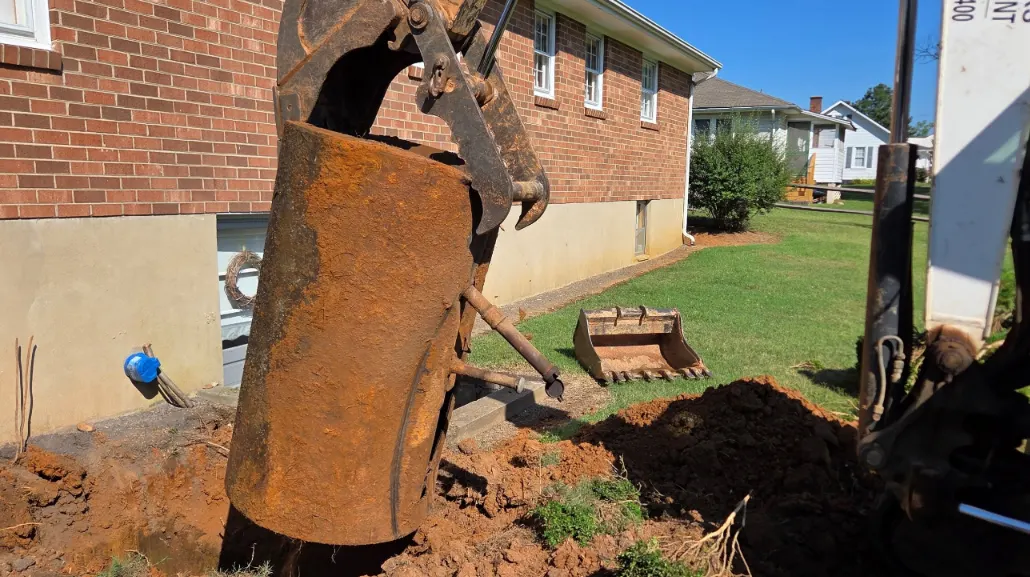 An old oil tank is easy to forget about, especially when it has been sitting behind a building, tucked into a basement, or buried underground for decades.
But old tanks do not improve with age.
Rust, corrosion, damaged fuel lines, and years of exposure can eventually cause a tank to leak. For homeowners, business owners, petroleum companies, gas stations, farms, and industrial properties across Southwestern Virginia, an unused tank can become more than an eyesore. It may create an environmental problem that needs professional attention.
Appalachian Environmental of Southwestern Virginia has the experience to help property owners with oil tank removal, environmental testing, and oil tank remediation when contamination is found.
Older heating oil and petroleum tanks can be found throughout Southwest Virginia. They are especially common at properties that were built before electric heat and modern heat pumps became widespread.
Properties in and around counties such as these may still have aging or abandoned tanks:
Independent cities and communities throughout the region may have the same issue, particularly where older homes, farms, commercial buildings, service stations, and industrial sites have changed heating or fuel systems over the years.
The age of the property alone does not tell the whole story. A house may have been converted from heating oil years ago, yet the old tank was simply left behind.
Picture a large farmhouse that once relied on oil heat every winter.
The heating system was replaced. The new equipment works perfectly. Everyone moved on.
The old tank did not.
If the tank remained underground, it could have spent another 20 or 30 years surrounded by damp soil. From the surface, everything may look normal.
That’s part of the problem.
Steel can corrode slowly, and a small petroleum leak does not always produce an obvious warning. By the time someone notices a fuel odor, stained soil, or unusual vegetation, the problem may already extend beyond the tank itself.
This is why environmental testing can be an important part of evaluating an old tank and the surrounding property.
Professional oil tank removal involves more than bringing in excavation equipment and pulling a steel container from the ground.
The tank and site should be evaluated carefully. Depending on the property and condition of the tank, the work may involve locating the tank, determining what remains inside it, safely managing residual fuel or sludge, removing the tank, inspecting the surrounding area, and determining whether additional testing is appropriate.
For commercial and industrial properties, storage tank removal can become more involved because of tank size, previous contents, site access, piping, surrounding pavement, and other infrastructure.
The same is true of fuel tank removal at former service stations, petroleum facilities, farms, fleet operations, and other properties where fuel was stored for equipment or vehicles.
Every site has its own history.
Finding a leak does not automatically mean the property is ruined. It does mean the situation should be handled correctly.
This is where oil tank remediation becomes important.
Environmental professionals can evaluate potentially affected soil and determine the appropriate response based on the conditions at the site. The goal is not simply to remove the old tank. It is to understand what happened around it.
Think of it like discovering a leaking pipe inside a wall. Replacing the pipe solves only part of the problem. You still need to know where the water went and whether it caused damage.
Petroleum releases deserve the same kind of careful thinking.
Soil can look perfectly ordinary while still requiring further investigation.
Professional environmental testing can help determine whether petroleum products have affected the soil around a tank. This information helps property owners make informed decisions instead of guessing.
Testing may be particularly important when:
For homeowners, there is also some peace of mind in knowing what is beneath the yard rather than wondering about it.
Heating oil was once a familiar sight throughout Virginia. Many older homes still have aboveground or underground tanks from earlier heating systems.
A homeowner may discover one while landscaping, replacing a heating system, preparing to sell a house, or renovating an older property.
Professional tank removal helps address the tank rather than leaving the problem for the next owner.
And if evidence of a petroleum release is discovered, Appalachian Environmental can help evaluate the next steps for oil tank remediation.
Old tanks are not limited to houses.
Commercial properties can have complicated petroleum histories, especially former gas stations, repair shops, manufacturing facilities, trucking operations, agricultural properties, and industrial sites.
Some sites have had several generations of tanks.
That’s where experience matters.
A storage tank removal project may uncover old piping, previously abandoned tanks, contaminated soil, or equipment that no longer appears on current property records. Careful site evaluation can help prevent unpleasant surprises as work progresses.
For petroleum companies and gas station operators, professional fuel tank removal and environmental services can also be an important part of property upgrades, closures, redevelopment, or replacement of aging equipment.
Honestly, an abandoned steel tank is not something most property owners want to think about.
There is always something more immediate demanding attention.
But rust keeps working.
Water keeps moving through soil.
And a tank that was sound years ago may not be sound now.
If you know an old petroleum or heating oil tank exists on your property, having it evaluated may help you understand its condition before a relatively simple tank removal turns into a much larger environmental concern.
Appalachian Environmental serves Southwestern Virginia property owners who need professional assistance with petroleum tanks and related environmental concerns.
Whether you own an older home, commercial building, gas station, petroleum facility, farm, or industrial property, Appalachian Environmental can help determine an appropriate path forward.
Services may include needs related to:
The important first step is finding out what you are dealing with.
An old tank may simply need to be removed. Another property may require testing. If a release has occurred, remediation may also be necessary.
Either way, ignoring the tank rarely makes it younger.
If you have an old, abandoned, leaking, or questionable oil or fuel tank on your Southwestern Virginia property, contact Appalachian Environmental today.
Whether you need oil tank removal, environmental testing, storage tank removal, fuel tank removal, or help with oil tank remediation, an experienced environmental professional can help you understand the condition of the site and determine what should happen next.
Don’t wait for an old tank to become a new problem.
Dead grass, stained soil, fuel odors or a sheen on water can point to a leaking oil tank. Learn six warning signs and when to get testing.
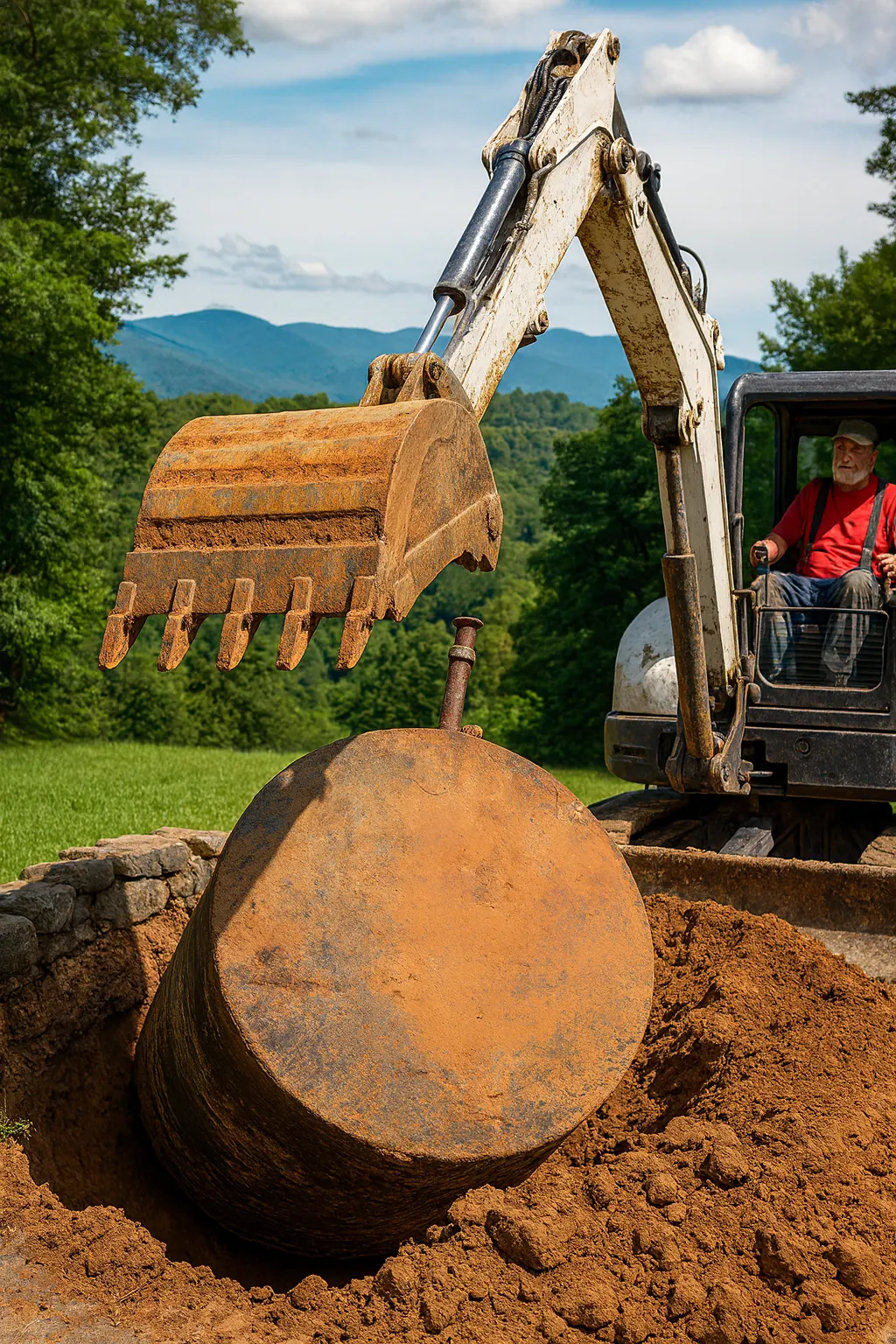
What happens before, during and after oil tank removal, from inspection and permits to excavation, soil testing and paperwork.

An abandoned heating oil tank can leak, lower home value and create legal trouble. Learn the risks and why removal is usually the safer choice.